Food Waste Warriors: How Youth Can Save the Planet One Meal at a Time 🌍🥪
Every year, the world throws away billions of pounds of food. That is not just wasted food, it is also wasted money 💸, wasted energy ⚡, and wasted water 💧. The International Day of Awareness of Food Loss and Waste is a reminder that every bite counts and that young people have the power to make a difference. Through #SmallActsBigImpacts, we know that even small changes add up to create a huge impact for the planet.
Think about this, when you toss half a sandwich in the trash, all the effort that went into making it disappears too. The water used to grow the wheat for bread, the energy used to ship the cheese, and the time spent preparing it all go to waste. That is why learning how to cut down on food waste is one of the easiest ways for pre-teens and teens to help the planet 🌱.
Why Food Waste Matters 🍽️
Food waste is not just about losing food, it is about losing resources. Did you know that almost one third of the food grown worldwide never gets eaten? Imagine going to the grocery store, buying three bags of food, and throwing one away before even opening it. That is what is happening every day around the world.
When food ends up in the trash 🗑️, it often goes to landfills where it breaks down and creates methane, a greenhouse gas that makes climate change worse. By wasting less, we are protecting the environment and making sure resources like water and energy are not thrown away too.
Smart Tips to Waste Less at Home and School 💡
The good news is that there are plenty of fun and simple ways you can waste less food. Here are a few ideas you can start today:
-
Save leftovers with style 🍱
Instead of throwing out extra dinner, pack it for lunch the next day. Leftover pasta can become a cold pasta salad, and yesterday’s chicken can turn into a wrap. -
Create rescued snacks 🍌🥤
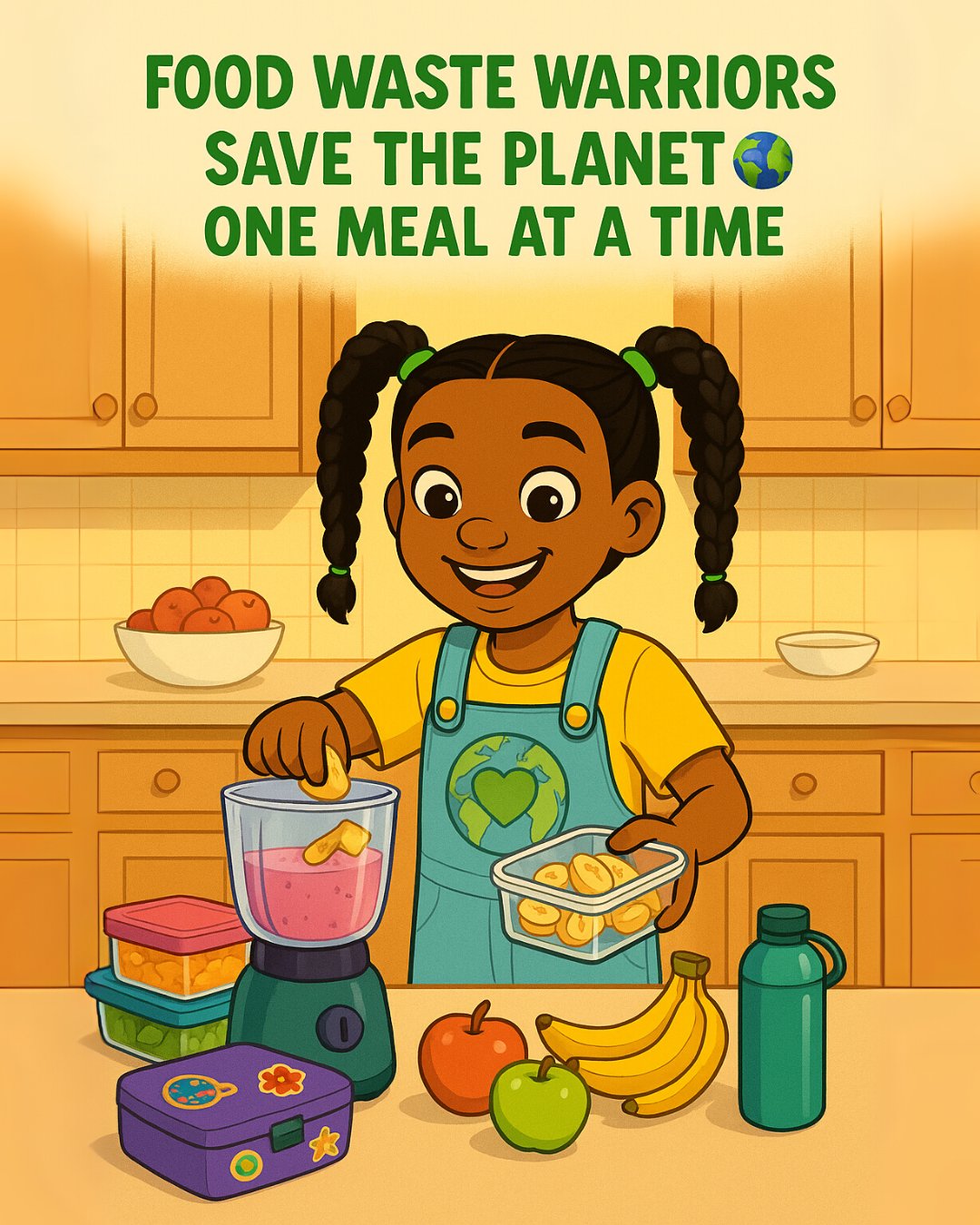
Overripe bananas make the best smoothies, slightly stale bread can be toasted into crunchy croutons, and wrinkly apples can be sliced for oatmeal toppings. Food does not have to be perfect to taste great. -
Check food labels carefully 🏷️
“Best by” and “use by” dates can be confusing. “Best by” is about quality, not safety. A bag of chips might taste a little less crunchy after the date, but it is usually still safe to eat. “Use by” means the food may not be safe after that date. Learning the difference helps prevent tossing out food too soon. -
Plan your plate 🍽️
At home or in the school cafeteria, take smaller portions first. You can always go back for seconds, but it is harder to save food once it is already on your plate. -
Get creative with lunchboxes 🎒
Mix and match what you have. A leftover piece of cheese, some crackers, and a sliced veggie can make a fun snack box. Creativity not only saves food, it makes lunch more exciting.
How Youth Can Lead the Way ✨
One of the best parts about fighting food waste is that kids and teens can inspire their families and schools. You do not have to wait until you are older to make a difference. By starting small, like making sure less food ends up in the trash at home, you are already a leader in your community.
Talk with friends about what they do with leftovers. Share recipes for rescued snacks. Ask your school cafeteria if they have a plan for unused food. Change often starts with one person asking a question or suggesting a new idea.
A Call to Action: Start a No Food Waste Week 📅
Here is your challenge. Start a “No Food Waste Week” at home or at school. For seven days, pay attention to what food gets thrown away. Keep a simple chart, or use sticky notes on the fridge to track it. Then, come up with solutions together. Could leftovers be used for lunches? Could snacks be made from fruit that is about to spoil?
Make it fun by sharing “rescued snack” recipes with friends, like smoothies made from overripe fruit or mini pizzas from leftover bread 🍕. Celebrate your success at the end of the week and see how much food you saved.
Making a Difference Starts With You 🌱
Food waste may seem small, but it adds up quickly. The International Day of Awareness of Food Loss and Waste reminds us that young people can lead the way toward a greener future. Every sandwich saved, every apple slice eaten, and every leftover rescued makes a difference. Through #SmallActsBigImpacts, we know that small choices create big ripples of change.
So grab your friends, start your own “No Food Waste Week,” and show the world that youth can be true Food Waste Warriors 💪🌎. Together, we can save money, protect resources, and help the planet one meal at a time.

Also in TuTu's Green Stuff Blog

Eco-Friendly Back-to-School Habits for a Greener School Year
A new school year is the perfect time for a fresh start. New classes, new teachers, and new goals give everyone a chance to build better habits, including habits that help protect our planet. 🌱

Join the Mission to Protect Nature This World Nature Conservation Day
🌍🍃 Every year on World Nature Conservation Day, people around the world take time to celebrate something we all depend on, nature. From the air we breathe and the water we drink to the forests, oceans, and wildlife that make Earth amazing, nature provides everything we need to survive and thrive.

International Plastic Bag Free Day, Take the Plastic Free Challenge
Did you know that something as small as a plastic bag can have a huge impact on the planet? Every year, people around the world recognize International Plastic Bag Free Day, a day that encourages everyone to think about how often we use plastic bags and how we can make better choices for our Earth.